

If you’ve spotted “DTTM” in a text message, Snapchat DM, or social media comment and had absolutely no idea what it meant — you’re not alone. This abbreviation pops up constantly in digital conversations, yet it confuses a surprising number of people. The reason? DTTM doesn’t have just one meaning. It shifts depending on who’s saying it, where they’re saying it, and what kind of mood they’re in.
In this complete guide, you’ll get the full picture: what DTTM stands for, how it’s used across different platforms, what it means in professional and medical contexts, and exactly how to respond when someone fires it your way. No fluff — just clear, practical answers.
Definition & Meaning
DTTM most commonly stands for “Don’t Talk To Me.”
It’s a shorthand expression used in text messaging and online communication to signal that someone is frustrated, overwhelmed, embarrassed, or simply not in the mood to engage in conversation. Think of it as a digital hand raised in the air that says, “Give me a moment — or several.”
Here’s a quick reference table:
| Acronym | Full Form | Context |
|---|---|---|
| DTTM | Don’t Talk To Me | Casual texting, social media, chats |
| DTTM | Date-Time | IT, databases, programming |
| DTTM | Date-Time Stamp | Medical records, clinical documentation |
| DTTM | Date-Time Marker | Aviation, flight data logs |
| DTTM | Date-Time of Measurement | Scientific and engineering fields |
While the casual texting meaning dominates everyday conversation, it’s important to understand that context completely changes which definition applies. A developer receiving a report asking for the “DTTM column” is talking about something entirely different from a teenager texting “DTTM” after an embarrassing moment.
Background & History
The rise of DTTM as everyday slang follows the same trajectory as most internet abbreviations. In the early 2000s, when SMS character limits were strict and phone keypads required multiple taps per letter, people naturally gravitated toward shortened expressions. Phrases like BRB (Be Right Back), TTYL (Talk To You Later), and LOL (Laugh Out Loud) became the foundation of a new digital dialect.
“Don’t Talk To Me” was already a common phrase in everyday speech — something people said when they needed space after an argument, a rough day, or an awkward situation. As texting culture took over, it was only natural that the phrase got compressed into four letters: DTTM.
Platforms like Twitter, Snapchat, Instagram, and later TikTok accelerated its spread. Gen Z in particular adopted abbreviations as a form of emotional shorthand — faster, punchier, and often more expressive than typing out a full sentence. DTTM found its home in this ecosystem.
Meanwhile, in technical fields, DTTM had a completely separate evolution. Developers working with databases needed compact variable names for storing timestamps. The abbreviation Date-Time (DTTM) became a standardized field type across many programming environments, spreadsheet systems, and enterprise databases — completely independent of its slang counterpart.
This dual evolution is what makes DTTM one of the more interesting abbreviations in modern communication: it bridges casual internet culture and serious professional terminology.
Also Read This: ICL Meaning in Text: Real Meaning, Usage & Examples in Chat (2026)
Usage in Various Contexts
Casual Conversations
In everyday texting between friends, DTTM usually falls somewhere on a spectrum between genuine frustration and dramatic humor. It’s the kind of thing someone sends right after:
- Bombing an exam they thought they aced
- Getting roasted in a group chat
- Receiving unexpected bad news
- Doing something embarrassing in public
Examples in casual text:
- “I tripped in front of everyone at the mall. DTTM.”
- “He seriously said that to me?? DTTM right now.”
- “My mom just read my journal. DTTM forever.”
The tone matters enormously here. When sent with a laughing emoji (😂) or a dramatic flair, DTTM is almost always playful. When it arrives without any emoji, or accompanied by something like 😤 or 😒, there’s a good chance the sender genuinely needs some space.
Social Media
On Instagram, TikTok, and Twitter/X, DTTM shows up in captions, comment sections, and reaction posts. TikTok in particular has embraced the phrase as a reaction format — videos where someone shares an embarrassing story often end with “DTTM” as the punchline. The over-the-top dramatic energy of the phrase fits perfectly with social media’s love of exaggerated reactions.
Common social media usage patterns:
- Caption under a relatable fail video: “DTTM, I can’t 💀”
- Comment on a cringy throwback photo: “DTTM lmaooo”
- Quote tweet after getting something badly wrong: “I was so confident. DTTM.”
Group Chats
Group chats are practically the natural habitat for DTTM. When the chaos of a group thread gets overwhelming, or when someone shares something embarrassing, DTTM acts as a quick exit sign. It keeps the energy moving without requiring a long explanation.
- Someone shares an old photo from middle school: “DELETE THIS. DTTM forever.”
- After losing a team game: “That last round was humiliating. DTTM the lot of you.”
In group chat dynamics, DTTM is rarely taken seriously. It’s usually followed by more roasting.
Humor and Memes
DTTM has taken on a meme-like quality online. It’s used to exaggerate reactions for comic effect — the digital version of a dramatic eye roll or storming out of a room. You’ll see it paired with GIFs, crying-laughing emojis, and long strings of “no no no no no.” When used in meme format, it’s almost always self-deprecating humor rather than actual frustration.
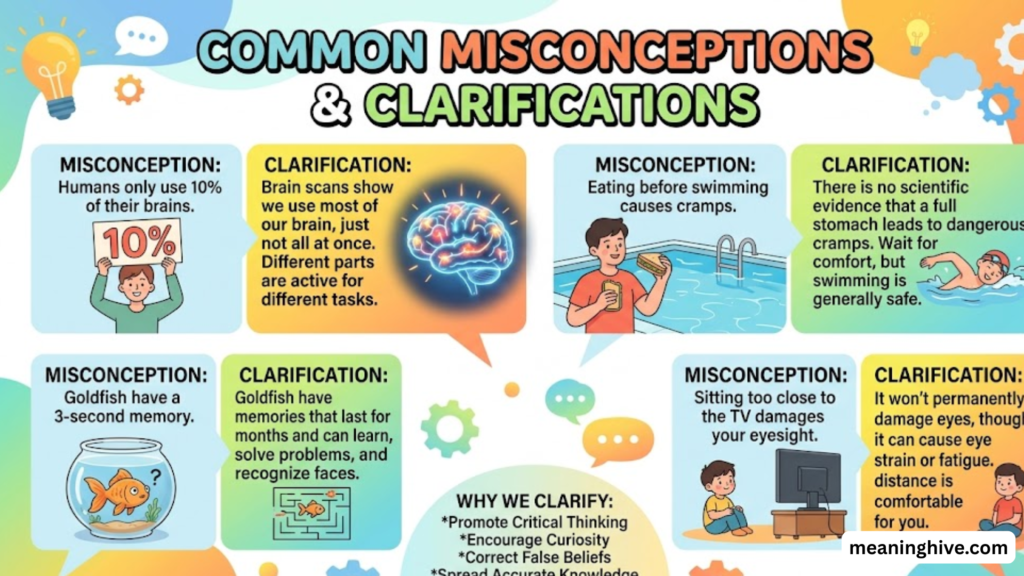
Common Misconceptions & Clarifications
A few myths about DTTM are worth clearing up:
| Misconception | Reality |
|---|---|
| It always means someone is angry | Often it’s playful or sarcastic |
| It signals the end of a friendship | Usually it’s temporary and emotion-driven |
| Only teenagers use it | Adults use internet slang too, especially millennial and Gen Z adults |
| It means the person is blocking you | Completely unrelated — blocking is a separate action |
| It’s always serious | Context and tone determine seriousness |
One of the most common mix-ups is confusing DTTM with DTM, which stands for “Don’t Text Me” — a slightly more pointed phrase that implies a longer desired period of no contact. DTTM is generally more in-the-moment and less permanent in feeling.
Another source of confusion is the technical meaning. If someone in a data analytics team or healthcare setting uses DTTM, they are almost certainly referring to Date-Time, not “Don’t Talk To Me.” Reading the room — or the context — is everything.
Similar Terms & Alternatives
If DTTM is part of your vocabulary, these related phrases probably are too:
| Term | Meaning | Tone |
|---|---|---|
| DTM | Don’t Text Me | Slightly more serious than DTTM |
| BRB | Be Right Back | Neutral, stepping away briefly |
| TTYL | Talk To You Later | Friendly sign-off |
| NVM | Never Mind | Dismissive, ends topic |
| IDGAF | I Don’t Give A [Anything] | Strong, often comedic indifference |
| SMH | Shaking My Head | Disappointment or disbelief |
| IRL | In Real Life | Contrast to online context |
| LEAVE ME ALONE (LMA) | Leave Me Alone | More intense, less common |
DTTM sits in a unique middle zone — more expressive than BRB, less aggressive than some alternatives, and flexible enough to shift between serious and comedic depending on how it’s delivered.
How to Respond to This Term
If It’s Playful
When DTTM clearly comes with a humorous tone — caps lock, emojis, following a funny story — lean into it. Match the energy.
- “LMAO okay I’ll check back in 3-5 business days 😂”
- “Noted. DTTM protocol activated.”
- “Fine fine, I’ll leave you to suffer in peace 💀”
This keeps the conversation light and shows you understood the joke.
If It Feels Critical
Sometimes DTTM signals genuine frustration or a need for emotional space. If the message feels tense or arrives after a disagreement, the best response is to give the person breathing room rather than pushing back immediately.
- “Okay, take your time. I’m here when you’re ready.”
- “Got it. Just know I’m here if you need to talk later.”
Avoid demanding an explanation or responding with defensiveness. Give the space that’s being asked for.
If You Don’t Understand It
There’s no shame in asking — especially with newer slang. A simple, casual question works fine:
- “Wait, what does DTTM mean lol?”
- “I’m out of the loop — are you okay or is that a joke?”
Most people will be happy to clarify. And now, of course, you already know the answer.
Regional or Cultural Differences
DTTM is primarily an English-language internet phenomenon rooted in American online culture. Its spread to other English-speaking countries — the UK, Australia, Canada — has been uneven. In the US, especially among Gen Z and younger millennials, it’s widely recognized. In non-English-speaking regions, it may not land at all without context.
A few cultural nuances worth knowing:
- In the UK, slang adoption from American internet culture tends to lag by a year or two, so DTTM may be less instantly recognized there.
- In many Asian countries with large English-speaking online communities (like India, the Philippines, and Singapore), American internet slang including DTTM has spread fairly widely through social media.
- In non-English-speaking communities, DTTM might be misread or ignored entirely, since the abbreviation only makes sense when unpacked in English.
If you’re unsure whether someone will recognize it, it’s always safer to type out the full phrase — especially in cross-cultural digital conversations.
Comparison with Similar Terms
Here’s how DTTM compares to the abbreviations it’s most often confused with:
| Term | Stands For | Intensity | Permanence | Tone Range |
|---|---|---|---|---|
| DTTM | Don’t Talk To Me | Medium | Temporary | Playful to serious |
| DTM | Don’t Text Me | Medium-High | Semi-permanent | Usually more serious |
| NVM | Never Mind | Low | Immediate | Neutral to passive |
| BRB | Be Right Back | Very Low | Very short-term | Neutral |
| IDGAF | I Don’t Give A — | High | Situational | Bold, comedic or serious |
DTTM’s defining characteristic is its flexibility. It can mean “give me five minutes” or “I’m genuinely upset” — and tone, context, and the relationship between the people involved are what determine which reading is correct.
Usage in Online Communities & Dating Apps
Online communities — Discord servers, Reddit threads, gaming lobbies — use DTTM liberally. In gaming spaces especially, it shows up constantly after a frustrating loss or a bad round. It’s become standard shorthand for “I’m tilted right now, let me cool off.”
On dating apps like Tinder, Hinge, or Bumble, DTTM appears less frequently in bios or opening messages (that would be a bold choice). It’s more common in ongoing conversations when someone is feeling overwhelmed, teasing their match about something embarrassing, or playfully setting a boundary.
Some dating app users use it humorously in bios to signal personality:
- “If my dog doesn’t like you, DTTM.”
- “Lost my keys for the 4th time this week. DTTM.”
This kind of self-aware humor signals relatability and a good sense of personality — exactly what profile bios are designed to communicate.
Hidden or Offensive Meanings
In the vast majority of cases, DTTM carries no offensive weight. It’s frustration or humor packaged into four letters. That said, context and relationship dynamics matter.
If DTTM is used repeatedly in an argument or as a way to consistently shut down communication, it can feel dismissive or emotionally avoidant. In those situations, the issue isn’t the abbreviation itself — it’s the underlying communication pattern.
There are no widely known vulgar or hidden meanings attached to DTTM specifically. It doesn’t carry the same risk of offensive interpretation that some abbreviations do. The phrase it represents — “Don’t Talk To Me” — is fairly straightforward, even if its emotional weight shifts depending on delivery.

Suitability for Professional Communication
Short answer: DTTM (as internet slang) has no place in professional settings.
Sending “DTTM” to a manager, client, or colleague would come across as rude or unprofessional regardless of how playful the intent was. Professional communication calls for full sentences and appropriate tone, even in casual work chat environments like Slack.
The only appropriate professional use of DTTM is its technical meaning — as a shorthand for Date-Time in database columns, reports, or engineering documentation. In that context, it’s standard and expected.
| Setting | DTTM Appropriate? |
|---|---|
| Text to close friend | Yes |
| Group chat with peers | Yes |
| Social media caption | Yes |
| Email to manager | No |
| Slack message to team | No |
| Database/IT documentation | Yes (Date-Time meaning) |
| Medical record system | Yes (Date-Time Stamp meaning) |
DTTM Meaning Medical
In healthcare and clinical settings, DTTM takes on a precise technical meaning: Date-Time of Measurement or Date-Time Stamp. This refers to the exact timestamp attached to a test, reading, medication administration, or patient observation in electronic health records (EHR) systems.
Accurate DTTM entries in medical documentation are critical for:
- Tracking when symptoms began or changed
- Verifying medication timing and dosage sequences
- Maintaining compliance with healthcare regulations
- Supporting accurate diagnosis and treatment decisions
If you see DTTM in a medical chart, lab report, or clinical software interface, it has nothing to do with internet slang. It is simply a timestamping field used to ensure data accuracy and patient safety. Medical professionals rely on these entries to create an accurate, chronological picture of a patient’s care.
What Does DTTM Stand For
To summarize all known full forms of DTTM across different contexts:
- Don’t Talk To Me — Texting, social media, online chat (most common)
- Date-Time — Databases, programming, IT systems
- Date-Time Stamp — Medical records and clinical documentation
- Date-Time Marker — Aviation and flight data logging
- Date-Time of Measurement — Scientific, engineering, and signal processing fields
- Discrete-Time Transfer Model — Control systems and engineering
The key principle is that the correct meaning is always determined by context. In a casual chat, it’s emotional shorthand. In a spreadsheet column header, it’s a timestamp field. Knowing which environment you’re reading it in solves the puzzle immediately.
What Does DTTM Mean on Snapchat
On Snapchat specifically, DTTM almost always means “Don’t Talk To Me” — and the platform’s format gives the phrase an extra layer of drama.
Snapchat’s disappearing message model makes DTTM land with a particular punch. When someone sends “Just embarrassed myself in front of my entire class. DTTM” and it vanishes in seconds, the fleeting nature of the message actually fits the emotional energy. It’s a quick, dramatic release — not necessarily a permanent statement.
Common Snapchat scenarios where DTTM appears:
- After posting a story that got roasted
- Following an awkward encounter described in a snap
- When a streak or challenge goes badly wrong
- As a reaction to shocking news or embarrassing moments
Because Snapchat skews toward a younger demographic and leans heavily on informal communication, DTTM fits naturally into the platform’s culture. It’s punchy, fast, and expressive — everything Snapchat messaging is built around.
Frequently Asked Questions
What does DTTM mean in texting? DTTM stands for “Don’t Talk To Me” — used to express frustration, need for space, or dramatic humor.
Is DTTM always serious? No. It’s often used playfully or sarcastically, especially among close friends.
What does DTTM mean on Snapchat? On Snapchat, it means “Don’t Talk To Me,” typically used in a dramatic or humorous way after something embarrassing or upsetting.
Does DTTM have a professional meaning? Yes — in IT, databases, and medical records, DTTM stands for “Date-Time” or “Date-Time Stamp,” referring to timestamp data.
What is DTTM in medical terms? In healthcare, DTTM refers to “Date-Time of Measurement” or “Date-Time Stamp,” used in electronic health records to log when an event occurred.
What’s the difference between DTTM and DTM? DTM means “Don’t Text Me” and tends to feel slightly more serious. DTTM (“Don’t Talk To Me”) is often more temporary and context-dependent.
Can I use DTTM at work? Only in its technical meaning (Date-Time). The slang version is inappropriate for professional communication.
Is DTTM understood globally? Mostly in English-speaking countries, particularly the US. Recognition varies significantly in non-English-speaking regions.
Conclusion
DTTM is one of those abbreviations that looks simple on the surface but carries genuine depth once you understand the full picture. At its most common, it’s a quick, punchy way to say “Don’t Talk To Me” — a digital boundary-setter that can be playful, serious, or anything in between depending on tone and context. In professional and technical fields, it takes on an entirely different identity as a timestamp shorthand used in everything from database management to medical records.
The most important takeaway? Context is everything. Read the conversation, consider the platform, think about the relationship — and you’ll rarely misread a DTTM again. Whether someone’s dramatic-texting about a bad day or a database engineer is labeling a column, you now have the full picture.
