

You’re texting a friend about weekend plans, and the reply comes back: “Sounds good, LMK!” You get the gist, but you pause for half a second anyway. Is it casual? Is it a soft way to end the conversation? Does it need an instant reply, or can it wait?
If you’ve landed here searching for the LMK meaning in text, you’re in good company. This three-letter abbreviation shows up in iMessage threads, Instagram DMs, Slack channels, dating app conversations, and gaming lobbies — and while it looks simple, the tone behind it shifts depending on who sends it and where.
This guide breaks down exactly what LMK means, how it’s used across different platforms and relationships, whether it can come across as rude or flirty, and how to reply naturally in any situation. By the end, you won’t just know the definition — you’ll know how to read the room every time you see it.
What Does “LMK” Mean in Text?
LMK stands for “let me know.” It’s a shorthand way of asking someone to share information, confirm a decision, or give you an update once they have one.
Instead of typing out the full phrase, people compress it into three letters — the same way “by the way” became BTW or “be right back” became BRB. It’s part of a much larger family of texting abbreviations that grew out of early SMS and instant messaging, where every character counted toward a message limit.
LMK works at the start, middle, or end of a sentence, and it doesn’t change meaning based on placement:
- “LMK what time works for you.”
- “I’ll LMK once I check my schedule.”
- “Heading out soon, LMK if you need anything.”
It’s almost always lowercase in casual chats (“lmk”), though it’s grammatically fine capitalized too. Either way, the meaning stays identical — this is informal language, so there’s no strict style rule to follow.
The Most Common Meanings of “LMK”
While “let me know” is the universal definition, the intent behind LMK can vary slightly depending on context. Here are the four most common shades of meaning you’ll come across.
1. “Let me know” (Main meaning)
This is the default, catch-all version. Someone is asking you to respond once you have the relevant information — no urgency, no pressure, just an open invitation to reply when you’re ready.
Example: “Going to the gym later, lmk if you want to come.”
2. “Inform me when ready”
Sometimes LMK is specifically about timing rather than a decision. The sender wants to hear from you the moment something is finished, available, or confirmed — not a yes/no answer right now.
Example: “LMK when the food arrives.”
3. “Keep me updated”
In ongoing situations — a project, a trip, a health update — LMK can mean the sender wants continued visibility, not just a one-time reply.
Example: “LMK how the interview goes.”
4. “Tell me your decision”
This version asks for a choice. It’s common when plans are still up in the air and someone is waiting on your final answer.
Example: “We can do pizza or sushi, lmk what you’d prefer.”
| Meaning | What It’s Really Asking | Example |
|---|---|---|
| Let me know | General request for a reply later | “LMK what you think of the draft.” |
| Inform me when ready | Notify me the moment something happens | “LMK when you land.” |
| Keep me updated | Ongoing check-ins, not a single reply | “LMK how the move goes.” |
| Tell me your decision | A specific choice or confirmation | “LMK if Friday or Saturday works.” |
How “LMK” Is Used in Real Conversations
Context changes everything with LMK. The same three letters can feel completely different depending on the platform and the relationship.
Friends & Casual Texting
Among friends, LMK is about as low-stakes as slang gets. It keeps plans flexible without anyone feeling pressured to commit on the spot.
- “We’re thinking of catching a movie tonight, lmk if you’re in.”
- “Still deciding on dinner, I’ll lmk in a bit.”
Instagram & Snapchat
On social platforms, LMK fits naturally into quick, snappy DMs where full sentences feel unnecessary.
- “Saw your story, lmk if you’re around this weekend.”
- “Got an extra ticket, lmk if you want it.”
Dating Apps
In dating conversations, LMK often signals openness without forcing anything. It can read as friendly, or — depending on the emoji and phrasing around it — slightly flirty.
- “I’m free Thursday, lmk if that works for you 🙂”
- “Down for coffee anytime, just lmk.”
Gaming & Online Communities
Gamers use LMK for fast coordination. There’s no emotional layer here — it’s purely practical, used to sync up plans or confirm availability.
- “Joining the raid at 9, lmk if you’re online.”
- “Need one more for the team, lmk asap.”
Work or Professional Chat
LMK shows up in semi-casual workplace tools like Slack or Microsoft Teams, especially among coworkers who already have an informal rapport. It’s far less common in formal emails or client-facing messages.
- “Sent the file over, lmk if it opens fine on your end.”
- “I’ll lmk once the report is finalized.”

Is “LMK” Rude, Flirty, or Offensive?
By itself, LMK is neutral. It doesn’t carry inherent rudeness or warmth — the surrounding words, punctuation, and emojis do all the emotional work. This is the part most guides skip, and it’s the part that actually matters when you’re trying to figure out what someone meant.
When it feels positive:
- It’s paired with an emoji or a warm follow-up: “lmk, would love to hear your take 😊”
- It comes attached to an invitation: “lmk if you want to come, would be fun!”
When it feels neutral:
- It’s used for logistics with no emotional undertone: “lmk when the package arrives.”
- It shows up in a work or group-planning context.
Also Read This: ISTG Meaning in Text: The Real Meaning Everyone Uses in 2026
When it can feel slightly cold:
- It’s a standalone reply with a period and nothing else: “Lmk.”
- It follows a heavier or more emotional message, where three letters feel like an abrupt brush-off.
- It’s used to close a conversation rather than continue it.
Can it be flirty?
Yes — but only with help. On its own, “lmk” is not a flirty phrase. Add a wink emoji, a teasing follow-up, or pair it with an open-ended invite, and the tone shifts noticeably:
- Neutral: “lmk if you’re free this week.”
- Flirty: “lmk if you’re free this week 👀”
The structure of the sentence matters too. “LMK when you’re free” assumes plans are already happening. “LMK if you’re ever free” leaves the door only slightly open. That single word — when versus if — often says more than the abbreviation itself.
How to Respond When Someone Says “LMK”
Replying to LMK is easy once you know the tone you’re matching. Here are go-to responses for different situations.
Casual replies
- “Will do!”
- “On it, I’ll lmk soon.”
- “For sure, give me a bit.”
Funny replies
- “Lmk yourself 😂”
- “Manifesting an answer for you as we speak.”
- “Working on it… slowly.”
Neutral replies
- “Sure, I’ll check and get back to you.”
- “Noted, will update you.”
Professional replies
- “Will confirm and let you know shortly.”
- “I’ll follow up once I have an answer.”
- “Thanks for flagging — I’ll update you by end of day.”
The one rule that applies across every category: if you say you’ll let someone know, actually follow through. LMK works as a social contract as much as a phrase — it implies a future reply is coming.
Common Misunderstandings About “LMK”
Even widely-used slang gets misread sometimes. Here are the most frequent mix-ups people run into.
1. Thinking it means something complicated
LMK isn’t hiding a deeper meaning. It’s simply “let me know” — no secondary code, no hidden agenda.
2. Confusing it with “LMAO” or “LMFAO”
These look similar at a glance but mean completely different things. LMK requests information; LMAO and LMFAO express laughter. Mixing them up in a fast-moving chat is an easy, common mistake.
3. Thinking it is rude
A short “lmk” with no extra words can feel blunt, but that’s a tone issue, not a built-in meaning. The abbreviation itself is polite by design — it’s literally a request, not a command.
4. Assuming urgency
LMK doesn’t mean “reply immediately.” It’s an open-ended request unless paired with words like “asap” or “now.” Confusing it with time-sensitive slang can create unnecessary pressure on either side of the conversation.
Similar Slang Terms You Should Know
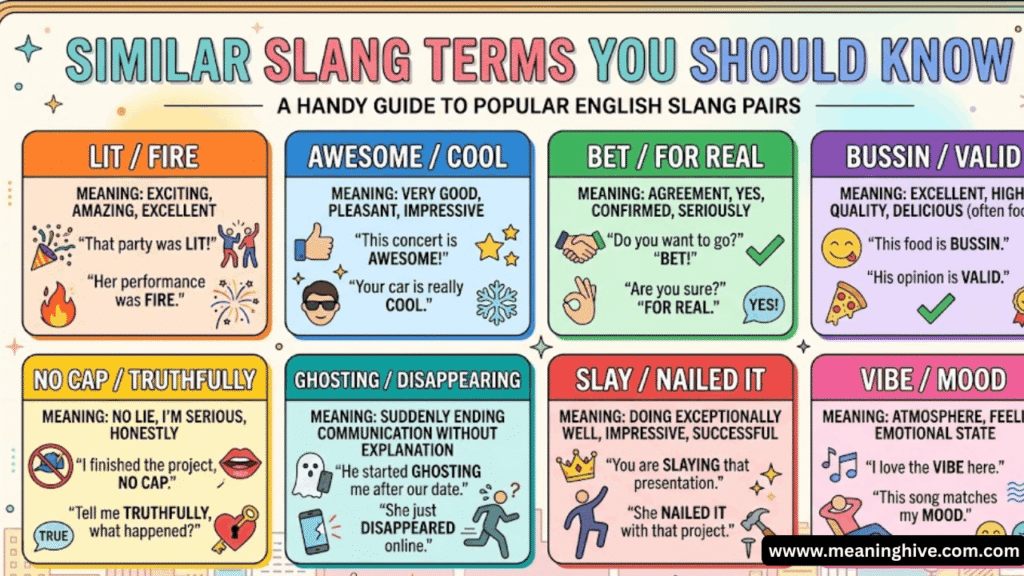
LMK belongs to a broader family of texting shorthand. Knowing how it compares helps you avoid mixing up similar-looking abbreviations.
| Term | Meaning | How It Differs From LMK |
|---|---|---|
| HMU | Hit me up | Active — asks someone to reach out and start a conversation now |
| FYI | For your information | One-directional — shares info, doesn’t request a reply |
| LYK | Let you know | The reverse of LMK — you’re the one promising an update |
| IDK | I don’t know | Expresses uncertainty, not a request |
| BRB | Be right back | Signals a short pause, unrelated to information requests |
| TTYL | Talk to you later | Ends a conversation rather than opening a request |
The most useful comparison is LMK vs. HMU. LMK is passive — it says “tell me once you know.” HMU is active — it says “reach out and talk to me now.” They often appear in similar contexts, but they point in opposite directions.
When You Should Avoid Using “LMK”
LMK is flexible, but it’s not universal. A few situations call for the full phrase instead.
Professional settings
In client-facing emails, job applications, or formal business correspondence, LMK can come across as careless. Stick with “please let me know” in these contexts — it reads as polished without losing the same meaning.
Cross-cultural chats
If you’re messaging someone who’s still learning English, or who comes from a culture less familiar with American texting slang, spelling things out avoids unnecessary confusion. Clarity always beats brevity in these conversations.
Sensitive situations
After a difficult conversation, an argument, or an emotional update, a bare “lmk” can feel dismissive — even if that’s not the intent. In moments like these, a fuller sentence (“Let me know how you’re feeling, I’m here”) carries the warmth that three letters can’t.
LMK Meaning From a Guy
When a guy sends “lmk,” context does most of the explaining. On its own, it’s neutral — a normal way to keep plans open. It tends to lean into one of three directions:
- Casual coordination — no emotional weight, just logistics (“lmk what time works”).
- A soft signal of interest — especially when paired with a specific timeframe (“lmk when you’re free this week”) rather than a vague, open-ended one (“lmk if you’re ever free”).
- A polite way to keep things low-key — common after a first date when someone wants to leave things open without committing to anything specific.
The presence (or absence) of an emoji, plus whether the message uses “when” or “if,” usually tells you which one you’re dealing with.
LMK ASAP Meaning
Adding “ASAP” changes the tone completely. While LMK alone is relaxed and open-ended, “lmk asap” introduces urgency — it’s asking for a fast reply, not a whenever-you-get-to-it one.
Example: “Need a headcount for the trip, lmk asap so I can book.”
This combination is common in group planning, work deadlines, or time-sensitive logistics where a delayed response would actually cause a problem.
LMK Meaning Medical
Outside of texting slang, LMK has an unrelated meaning in medical and scientific contexts: it can refer to lysine, one of the essential amino acids, often abbreviated as “Lys” or “K” in biochemistry notation, with LMK occasionally appearing in shorthand notes or coursework. This usage has nothing to do with the texting abbreviation and is specific to academic or clinical settings — if you’ve seen “LMK” in a biology or nutrition context, it’s almost certainly referring to this amino acid rather than “let me know.”
Conclusion
LMK is one of those abbreviations that looks tiny but carries a lot of conversational flexibility. At its core, it simply means “let me know” — a friendly, low-pressure way to ask for information, an update, or a decision. The real skill isn’t memorizing the definition; it’s reading the tone around it. A single emoji, a word like “when” instead of “if,” or the formality of the platform can shift LMK from purely practical to warmly personal — or, in rare cases, slightly cold.
Once you know what to look for, you’ll never have to second-guess a text again. Whether you’re coordinating weekend plans, replying to a coworker, or decoding a dating app message, LMK is simple once you understand the context doing the real talking.
FAQs
What does LMK mean in a text? LMK means “let me know.” It’s used to ask someone to share information or give an update later.
Is LMK rude? No, it’s not rude by default. Tone depends entirely on the words and punctuation around it.
Can LMK be used at work? Yes, in casual internal chats like Slack or Teams. Avoid it in formal emails or client communication.
Is LMK the same as HMU? No. LMK asks someone to tell you something later; HMU asks someone to contact you and start talking now.
Does LMK mean something is urgent? Not on its own. Add “ASAP” if you need a fast response — plain “lmk” is open-ended.
Can LMK be flirty? Yes, but only with help from emojis, tone, or context. The abbreviation itself is neutral.
What’s the difference between LMK and LYK? LMK means “let me know” (you’re asking for info). LYK means “let you know” (you’re promising info).
Should I spell out “let me know” instead of using LMK? In formal writing or with someone unfamiliar with slang, yes. In casual texting, LMK works fine.
