

You’re scrolling through messages when a friend drops just two letters: “TB.” No context. No explanation. Just TB. Sound familiar?
If you’ve ever stared at that abbreviation wondering what someone actually meant, you’re in good company. TB is one of those slang terms that can shift its meaning depending on who sends it, what platform you’re on, and the tone of the conversation. Get it wrong, and you could misread a nostalgia moment as a demand — or miss a friendly nudge altogether.
This guide breaks down every angle of the TB meaning in text, from its most common uses to platform-specific meanings, misconceptions, and even what it means when a girl sends it. Let’s decode it once and for all.
What Does TB Mean?
In texting and online chat, TB most commonly stands for “Text Back” or “Throwback” — and the right interpretation depends entirely on context.
- Text Back — A casual request asking someone to reply to a message.
- Throwback — A nostalgic reference to a past memory, photo, or moment.
These two meanings dominate everyday digital conversations, and knowing which one applies is simpler than it sounds once you understand the context clues.
Example:
| Message | Most Likely Meaning |
|---|---|
| “Hey, tb when you’re free” | Text Back |
| “TB to last summer 🌴” | Throwback |
| “TB to our first road trip 😭❤️” | Throwback |
| “Can you tb? I need to ask you something” | Text Back |
Other Meanings of TB
While “Text Back” and “Throwback” lead the pack, TB can occasionally stand for other things depending on context:
- To Be — Used in planning or informal notes (“details TB confirmed”)
- Too Bad — Expressing mild disappointment in casual chats
- Tuberculosis — Strictly in medical or health-related discussions
- Terabyte — In tech and data storage conversations
- Talking ‘Bout — Short for “talking about,” used in some regional slang circles
In casual everyday texting, these alternate meanings are rare. If you see TB in a personal message or social media post, stick with Throwback or Text Back until context says otherwise.
Real-Life Example:
Friend: “Omg, I just found this photo from 2019. TB to the best concert we ever went to 🎶” You: “No way!! I miss this so much 😭”
Here, TB clearly signals Throwback — a shared nostalgic moment brought back to life with two simple letters.
Origin and Background of the Term
Text abbreviations didn’t appear overnight. They grew out of necessity.
In the early days of SMS messaging, character limits forced people to get creative. Typing “text back” used up 9 characters; “TB” used only 2. That efficiency made short forms like TB incredibly practical, and they stuck around long after character limits stopped being a real concern.
The “Text Back” meaning evolved naturally from that early texting culture — a quick, low-effort way to nudge someone into replying without writing a full sentence.
The “Throwback” meaning has a different origin story. It exploded with the rise of Instagram and Facebook in the early 2010s, when hashtag culture turned #ThrowbackThursday (or #TBT) into a weekly social ritual. Users would post old photos every Thursday with the tag, and over time, “TB” became a shorthand for any nostalgic content — not just Thursday posts. The hashtag migrated from captions into direct messages, comments, and casual chats, cementing TB as a term tied to memory and nostalgia.
By the mid-2010s, both meanings were in wide circulation simultaneously, and that’s exactly where they remain today.
Also Read This: WTM Meaning in Text: Shocking Truth Revealed
How TB Is Used in Daily Life
TB shows up across a surprising range of everyday digital situations. Here’s how it plays out in real conversations:
1. Asking for a Reply
This is the most direct use of TB. Someone sends a message and wants to make sure you’ll respond.
“Hey, I texted you earlier — tb when you can 👀”
The tone here is friendly but slightly insistent. It’s not aggressive, just a gentle digital poke.
2. Ending a Conversation
TB can act as a soft sign-off that keeps the door open.
“Gotta run, tb later!”
Translation: I’ll message you again later, or feel free to reply when convenient.
3. Casual Reminder
When someone’s waiting on a response and doesn’t want to seem pushy, TB softens the follow-up.
“Just wanted to check — did you see my last message? tb 😊”
It’s the polite alternative to “Why haven’t you replied?”
4. Social Media Nostalgia
On Instagram, TikTok, Facebook, and Snapchat, TB appears in captions, stories, and posts to frame throwback content.
“TB to when we had no responsibilities 😂 #tb #throwback”
This usage is almost always warm, playful, or emotionally charged.
5. Friendly Check-In
In some conversations, TB functions almost like a casual “are we good?” signal.
“Haven’t heard from you in a bit — tb whenever! No rush 🙂”
This blend of Text Back and general friendliness makes it feel low-stakes and easy to respond to.
6. Quick Communication
In fast-moving group chats, TB keeps things moving without breaking the flow.
“Busy right now, tb in an hour”
Short, clear, and nobody needs to ask what it means.
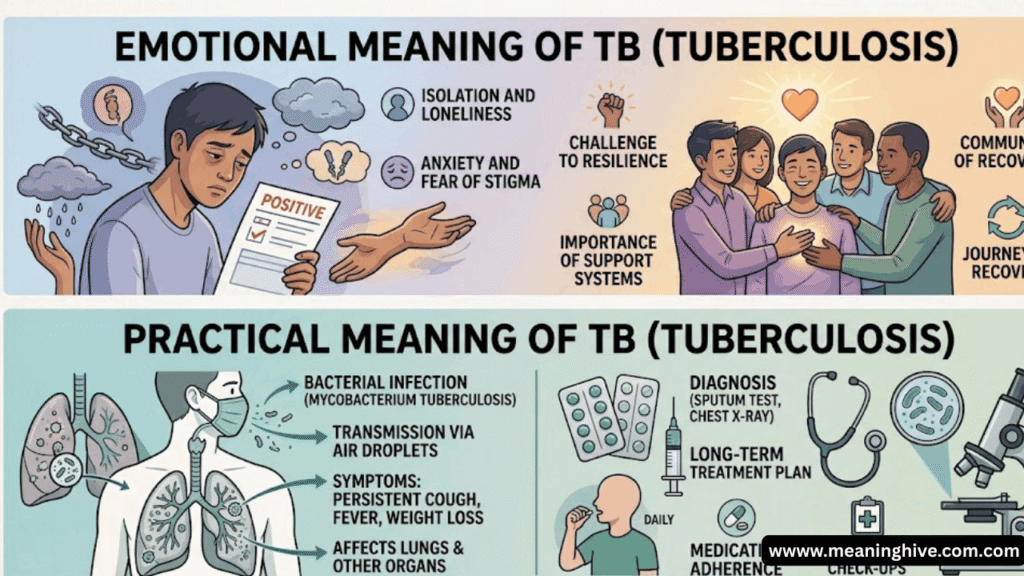
Emotional or Practical Meaning of TB
TB carries two distinct emotional registers, depending on which meaning is in play.
When used as Throwback, TB taps into something genuinely human — the desire to revisit happy memories and share them with people you care about. Sending someone a “TB” message with an old photo is a small act of emotional connection. It says: I thought about us, about this moment, and I wanted you to feel it too. That’s why throwback content consistently performs well on social media. Nostalgia is powerful, and TB is its shorthand.
When used as Text Back, the emotional weight shifts. It’s practical rather than sentimental. But tone still matters here. A warm “tb when you get a chance!” feels completely different from a clipped “TB.” — the period adds impatience in a way the casual version doesn’t. The same two letters can read as friendly or demanding depending on punctuation and phrasing.
Understanding this emotional layer helps you respond appropriately and use TB in a way that lands the way you intend.
Similar or Related Terms
If you’re decoding TB, these closely related abbreviations are worth knowing:
| Term | Meaning |
|---|---|
| TBT | Throwback Thursday — the original hashtag that inspired TB |
| TBH | To Be Honest — sounds similar but means something completely different |
| TBC | To Be Confirmed — often confused with TB in planning conversations |
| LMK | Let Me Know — similar function to TB as Text Back |
| HMU | Hit Me Up — another way to request contact or a reply |
| BRB | Be Right Back — signals a temporary pause in conversation |
| TTYL | Talk To You Later — a soft goodbye, similar to “tb later” |
The most common mix-up is between TB and TBH. They look alike at a glance, but TBH introduces a candid opinion (“TBH, I didn’t love the movie”), while TB references the past or requests a reply. Treating one as the other creates genuinely confusing conversations.
Common Misunderstandings About TB
TB is small but surprisingly misunderstood. Here are the six most common misconceptions people have about it:
1. TB Always Means Text Back
Not true. On social media platforms, TB overwhelmingly means Throwback. If someone posts an old photo with a “TB” caption, they’re not asking you to text them — they’re sharing a memory. Context is everything.
2. It’s a Formal Term
TB is 100% informal slang. It belongs in casual texts, DMs, social media captions, and group chats — not professional emails, academic writing, or formal communication of any kind.
3. It’s Only for Young People
This misconception underestimates how widely digital communication has spread. While TB originated in younger demographics and is heavily associated with Gen Z and younger Millennials, plenty of adults across age groups use it regularly, especially the Throwback meaning on social media.
4. It’s Rude or Demanding
TB used as Text Back is sometimes read as pushy, but that interpretation usually comes from tone, not the word itself. “TB when you can!” is perfectly friendly. The abbreviation itself is neutral.
5. It’s Outdated
TB is absolutely still in active use. The Throwback meaning continues to thrive with nostalgic content across Instagram, TikTok, and Snapchat. The Text Back meaning persists in daily messaging. Neither usage is going away.
6. It Has Only One Meaning
This may be the biggest myth of all. TB carries multiple legitimate meanings across different platforms and contexts. Assuming it only means one thing is how misunderstandings happen.
Examples of TB in Sentences
Here’s how TB appears across a range of real-world conversations:
Throwback usage:
- “TB to the best trip of my life 🌊”
- “Omg TB to when we used to do this every weekend 😭”
- “Found my old yearbook photo — TB to the cringe era 😂”
- “TB vibes only tonight 🎶 old playlist, old memories”
Text Back usage:
- “Hey, haven’t heard from you — TB when you’re free!”
- “Quick question, TB when you see this 🙏”
- “Driving right now, I’ll TB in 20”
- “TB me your address when you get a chance”
Other meanings in context:
- “Minimum storage needed is 2 TB” — Terabyte
- “The doctor mentioned testing for TB just to rule it out” — Tuberculosis
- “Meeting time is TB — still sorting schedules” — To Be (confirmed)
Why Understanding TB Matters Today
Digital communication moves fast. Abbreviations like TB are designed to keep up — short, flexible, and loaded with meaning when you know how to read them.
Misreading TB can lead to real confusion. Responding to a Throwback message as if it were a Text Back request makes you look out of touch. Ignoring a Text Back thinking it’s just nostalgic content means leaving someone waiting on a reply they were clearly expecting.
Beyond avoiding awkward exchanges, understanding TB (and internet slang in general) helps you communicate more naturally in digital spaces. It shows cultural literacy — the ability to read context, tone, and platform cues without over-explaining or over-thinking every message.
As online communication continues to evolve, two-letter abbreviations will only become more common, not less. TB is a small example of how much meaning can be packed into minimal characters when the right shared understanding is in place.
TB Meaning in Text Slang
In the broader world of text slang, TB sits comfortably alongside other short, context-dependent abbreviations. It’s what linguists would call a polysemous term — one word (or in this case, two letters) carrying multiple meanings that coexist without confusing fluent users.
Within Gen Z slang culture specifically, TB carries a secondary layer: it’s not just about the memory itself, but about the act of sharing it. Sending someone “TB to this 💙” with an old photo signals emotional intimacy. It tells the other person you’re thinking about shared history and that it still means something to you. That social function goes beyond nostalgia into relationship maintenance — a small but meaningful form of digital connection.
TB Meaning in Text from a Girl
When a girl sends TB in a text message, the meaning depends almost entirely on what else is in the conversation.
If the message contains an old photo, memory, or emotional context, she’s almost certainly using it as Throwback — sharing something from the past that she associates with the relationship, friendship, or shared experience. This usage often signals warmth, nostalgia, and a desire to reconnect over a shared memory.
If TB appears at the end of a message without nostalgic context — especially if she’s checking in or following up — it almost certainly means Text Back. In this case, she’s looking for a reply and using the abbreviation to keep the message casual rather than demanding.
The key difference: photo or memory reference = Throwback. Follow-up or check-in = Text Back. When in doubt, the surrounding message almost always makes the intent clear.
TB Meaning in Social Media
Across social media platforms, Throwback dominates as the primary TB meaning — and it has since the early days of hashtag culture.
On Instagram, TB appears in captions alongside old photos, usually evoking nostalgia, humor, or warmth. The hashtags #tb and #throwback remain widely used, signaling to followers that the content is from the past.
On TikTok, TB appears in comment sections and captions when creators reference older content, childhood memories, or cultural moments from years past.
On Facebook, older users tend to use TB in the same nostalgic, memory-sharing sense, often with throwback albums or anniversary posts.
In direct messages across all platforms, TB can shift back to the Text Back meaning — especially in private one-on-one conversations where someone is following up on a message.
TB Meaning in Text Snapchat
Snapchat has its own relationship with TB, shaped by the platform’s emphasis on real-time sharing and disappearing content.
On Snapchat, TB most often appears in captions on throwback snaps — photos or videos from the camera roll that users re-share for nostalgic effect. You’ll see it paired with old selfies, group photos, or videos from events that happened months or years ago.
In Snapchat direct messages, the Text Back meaning is more likely — particularly when someone is following up after a snap that went unanswered. Because Snapchat tracks message delivery and open status, users are very aware of when their messages have been seen. TB in a DM context often translates to a friendly “hey, I know you saw this — reply when you can.”
FAQs
What does TB mean in a text message? It usually means “Text Back” (a request to reply) or “Throwback” (a reference to a past memory) — the right meaning depends on context.
Does TB always mean Throwback? No. On social media it often does, but in private messages it frequently means Text Back.
What does TB mean from a girl? Usually Throwback if she’s sharing a memory, or Text Back if she’s following up and wants a reply.
Is TB slang or an abbreviation? Both — it’s an informal abbreviation that functions as everyday slang in digital conversation.
What’s the difference between TB and TBT? TBT stands for Throwback Thursday (a specific weekly hashtag), while TB is a more general term used any day.
Can TB be rude? Not typically. Tone and phrasing matter more than the abbreviation itself.
Is TB still used in 2026? Yes — both the Throwback and Text Back meanings remain in active, widespread use.
What does TB mean on Snapchat? Usually Throwback in captions or stories; Text Back in direct messages.
Does TB mean tuberculosis in texting? Only in medical or health-related conversations. In casual texting, this meaning is extremely rare.
What does “no TB” mean? It means no throwback — the person has no nostalgic content to share, often said in response to throwback challenges or group chat discussions about old memories.
Conclusion
Two letters. Multiple meanings. One simple rule: context always wins.
Whether TB lands as a nostalgic Throwback, a gentle Text Back nudge, or something else entirely, understanding the platform, tone, and surrounding message tells you everything you need to know. Once you internalize that, TB becomes one of the easier abbreviations to decode in the ever-shifting world of digital slang.
The next time someone drops a “TB” in your messages, you won’t have to guess. You’ll know exactly how to read it — and exactly how to reply.
