

You are scrolling through your messages and suddenly you see it — KMSL. Your first instinct might be concern. What does that even mean? Is it serious? Should you be worried?
Relax. KMSL is one of the most misunderstood abbreviations in internet slang, and once you understand it, you will wonder how you ever missed it. This guide breaks down exactly what KMSL means in text, where it came from, how people use it across different platforms, and when you should (or absolutely should not) use it yourself.
Whether you are a parent trying to decode your teenager’s messages, a new social media user getting up to speed with online slang, or just someone who spotted the term in a meme — you are in the right place.
What Does KMSL Mean? Definition & Meaning
KMSL stands for “Killing Myself Laughing.”
It is a hyperbolic slang expression used to indicate that something is extremely funny. When someone types KMSL in a chat, comment, or text message, they are not expressing anything harmful or literal. They are simply saying: “That is so funny I cannot handle it.”
Think of it as a more dramatic, expressive cousin of LOL (Laughing Out Loud) or LMAO (Laughing My A** Off). It follows the same pattern of internet humor where exaggeration is the point. The “killing myself” part is not meant to be taken seriously at all — it is pure comedic hyperbole, the digital equivalent of saying “I’m dead” after a hilarious joke.
Quick Definition Box:
| Term | Full Form | Tone |
|---|---|---|
| KMSL | Killing Myself Laughing | Humorous, Exaggerated |
| LOL | Laughing Out Loud | Mild, Casual |
| LMAO | Laughing My A** Off | Stronger Humor |
| ROFL | Rolling On the Floor Laughing | Playful, Old-school |
| KMSL | Killing Myself Laughing | Dramatic, Expressive |
KMSL is almost always typed in all caps for extra emphasis, though you may occasionally see it in lowercase (kmsl) in more casual, laid-back messages. The all-caps version signals that the person found something genuinely hilarious, not just mildly amusing.
Background & History of KMSL
To understand where KMSL came from, you need to go back to the early days of internet chat culture — think late 1990s and early 2000s. This was the era of AIM (AOL Instant Messenger), MSN Messenger, early SMS texting, and the first wave of online forums.
During this period, internet users — particularly teenagers — began experimenting with abbreviated language to type faster and communicate more expressively. Classic terms like LOL, BRB (Be Right Back), OMG, and SMH (Shaking My Head) were born out of this era.
KMSL grew alongside these abbreviations as a more dramatic alternative. While LOL became the universal gold standard for expressing laughter online, some communities wanted something that felt more intense, more emotional, more alive. KMSL filled that gap.
However, KMSL never quite reached the mainstream dominance of LOL or LMAO. Its phrasing — which on the surface references self-harm — made it a slightly edgier, niche term. It survived and thrived in specific online communities: gaming circles, close friend group chats, meme culture, and certain social media platforms where expressive hyperbole is the norm.
By 2020 and beyond, KMSL had cemented itself as a recognizable piece of internet slang, even if it remained less universal than LOL. In 2026, it continues to appear regularly in casual text conversations, comment sections, and group chats — especially among users who grew up with it.
Also Read This: 576+ TTYS Meaning in Text: What It Really Means and How to Use It Correctly (2026)
Usage in Various Contexts
Understanding KMSL goes beyond just knowing the definition. Context is everything in internet slang. Here is how KMSL appears across different digital spaces.
1. Casual Text Conversations
This is the most common place you will encounter KMSL. Between close friends, the term flows naturally as a quick reaction to something funny.
Example:
Friend A: “I just tried to pay for my coffee and handed the cashier my library card.” Friend B: “KMSL 😂 did they even say anything??”
In private text conversations, KMSL works as a standalone response or alongside other slang and emojis. It signals closeness — you generally use it with people who already know your humor and will not misinterpret it.
2. Social Media Comments
On platforms like Instagram, TikTok, Twitter/X, and Facebook, KMSL appears frequently in comment sections — especially under funny videos, memes, or embarrassing posts.
Example Instagram comment:
“This dog tried to fit into a cat door and just gave up halfway 💀 KMSL”
Because social media comments are often read by strangers, context matters even more here. Most people scrolling past will recognize KMSL as humor, but some unfamiliar users might do a double-take.
3. Gaming Chats
The gaming community has always had its own unique dialect of internet slang, and KMSL fits right in. After a spectacularly bad play, an unexpected glitch, or a ridiculous moment in a multiplayer game, players drop KMSL in the chat without hesitation.
Example:
Player 1: “I just accidentally threw a grenade at my own team while trying to reload” Player 2: “KMSL BRO how 💀💀”
In gaming contexts, KMSL often pairs with other reactions like “gg” (good game), “rip,” or skull emojis to emphasize comedic disbelief.
4. Group Chats
Group chats — whether on WhatsApp, iMessage, Telegram, or Discord — are prime territory for KMSL. These spaces typically involve people who know each other well, which makes the exaggerated humor land perfectly.
Example group chat exchange:
Someone shares a meme about group projects Three people reply: “KMSL”, “Dead 💀”, “This is us every time”
In group settings, KMSL also functions as a bonding mechanism. When everyone laughs together online, it builds connection — even across distances.
Common Misconceptions & Clarifications
The biggest misconception about KMSL is obvious: people sometimes read it literally on first encounter. If you have never seen the term before, “killing myself” can sound alarming. But this reaction fades quickly once you understand internet humor culture.
Here are the most common misunderstandings:
Misconception 1: KMSL is related to self-harm. Not even close. KMSL is a laughter expression, full stop. It follows a long tradition of comedic exaggeration in English — like saying “I’m dying” when something is funny, or “you’re killing me” when someone makes a great joke.
Misconception 2: KMSL and KMS mean the same thing. They do not. KMS (Kill Myself) is a different abbreviation that can express frustration or embarrassment — and in some contexts, it can carry more weight if used in a serious tone. KMSL, however, has the word “Laughing” built right into it, which makes its humorous intent unmistakable.
Misconception 3: Only teenagers use KMSL. While younger internet users popularized the term, KMSL is used across a wide age range — anyone who came of age with internet culture in the 2000s and 2010s may use it comfortably.
Misconception 4: KMSL is always written in all caps. Usually, yes — all caps adds dramatic punch. But lowercase “kmsl” appears in more relaxed, casual messages where the person is not emphasizing the intensity of their laughter.
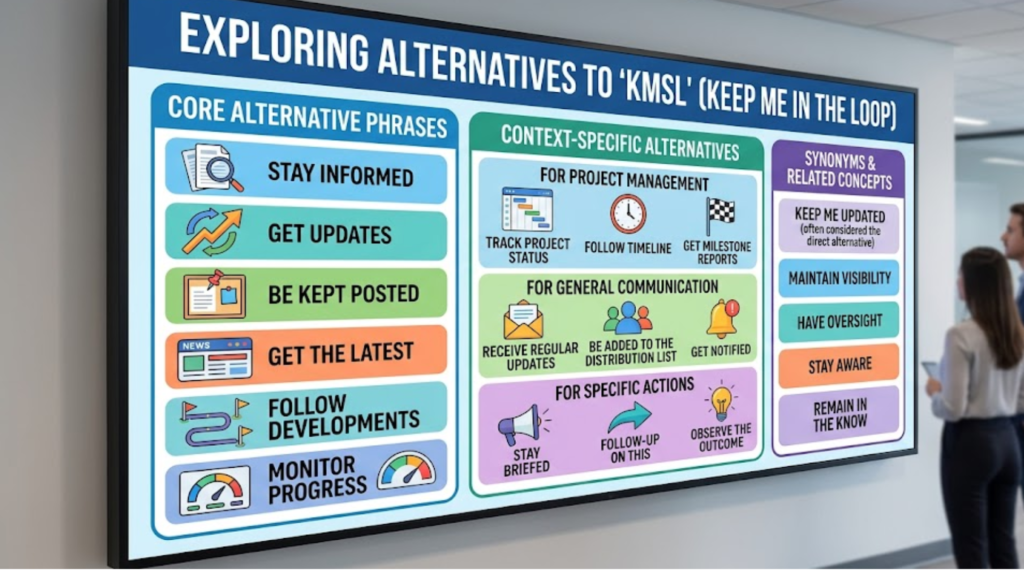
Similar Terms & Alternatives to KMSL
If KMSL feels too intense for a particular situation, or if you want variety in how you express laughter online, here are the most common alternatives and how they compare:
| Slang Term | Meaning | Intensity Level | Best Used When |
|---|---|---|---|
| LOL | Laughing Out Loud | Low | Mild amusement, polite laughter |
| LMAO | Laughing My A** Off | Medium | Genuinely funny moments |
| ROFL | Rolling On the Floor Laughing | Medium-High | Classic internet humor |
| KMSL | Killing Myself Laughing | High | Something truly hilarious |
| I’m dead / 💀 | Figurative death from laughter | Very High | Gen Z favorite, meme culture |
| I’m weak | Can’t stop laughing | High | Informal, among close friends |
| LMFAO | Laughing My F*ing A Off | Very High | Strong reaction, adult content |
| HAHA / hahahaha | Direct laugh representation | Variable | Universal, always understood |
The modern trend is moving toward simpler visual shorthand — skull emojis (💀), crying-laughing emojis (😂😂), and phrases like “I’m weak” or “I’m dead.” But KMSL holds its own because it carries a nostalgic internet culture energy that many users still appreciate.
How to Respond to KMSL
If someone sends you KMSL in a text or drops it in a comment, responding is easy. The person is simply reacting with laughter — you do not need to overthink it.
Appropriate responses include:
- Match their energy: “KMSL too honestly 😂”
- Ask a follow-up: “Right?? I cannot believe that happened”
- Share the moment: “Send this to everyone, they need to see”
- Use an emoji response: 💀 or 😂 alone works perfectly
- Keep the humor going: Build on whatever made them laugh
What not to do: Do not respond with concern or ask if they are okay. KMSL is clearly a humor expression — treating it as serious will come across as tone-deaf in the conversation.
The exception: if someone’s message has multiple signals of genuine distress alongside KMSL, always trust your instincts. Context and relationship matter most.
Regional or Cultural Differences
Internet slang rarely respects geographic borders, and KMSL is no exception. However, there are some regional nuances worth understanding.
United States: KMSL originated primarily in American internet culture and is most commonly understood there. American Gen Z and Millennial users are generally very familiar with it.
United Kingdom and Australia: English-speaking users in the UK and Australia also use KMSL, though it is slightly less common. Alternatives like “I’m dead” or “crying” tend to be more popular in British slang circles.
South Asian Communities: KMSL appears in South Asian internet culture, particularly among English-speaking youth in countries like India, Pakistan, and Bangladesh. It often mixes with regional humor in WhatsApp group chats.
Non-English Speakers: For users who primarily speak other languages, KMSL can be confusing on first encounter. In multilingual online communities, clearer options like LOL or 😂 are often preferred to avoid misunderstanding.
Global Social Media: On platforms like TikTok and Instagram where content crosses international borders constantly, KMSL is increasingly recognized worldwide — though its reach still does not match LOL, which is arguably the most internationally understood laughter acronym.
Comparison with Similar Terms
It helps to see exactly how KMSL stacks up against its closest cousins in the laughter slang family.
KMSL vs. LOL: LOL is a gentle laugh — it can even be used sarcastically or as a soft acknowledgment. KMSL is unmistakably intense. You would use LOL when someone says something mildly funny. You use KMSL when you actually cannot stop laughing.
KMSL vs. LMAO: LMAO sits between LOL and KMSL in terms of intensity. KMSL carries a slightly more dramatic, expressive tone. Both are used for genuine laughter, but KMSL communicates that something is exceptionally hilarious.
KMSL vs. ROFL: ROFL (Rolling On the Floor Laughing) is an older term that has somewhat fallen out of fashion among younger users. KMSL carries more modern energy, though both express strong laughter. ROFL feels more playful and less edgy.
KMSL vs. 💀 (Skull Emoji): The skull emoji has become a Gen Z staple for expressing “I’m dead from laughter.” It is visual, fast, and works across language barriers. KMSL is more verbal and specific. Both are used for the same emotional purpose but appeal to slightly different communication styles.
Usage in Online Communities & Dating Apps
KMSL has carved out a comfortable niche in several specific online communities.
Reddit and Forums: In subreddits dedicated to humor, fails, or memes, KMSL appears regularly in comment threads where something genuinely caught someone off guard with its hilarity.
Discord Servers: Gaming and hobby-based Discord communities frequently see KMSL in casual channels. It fits the fast-paced, reaction-heavy style of Discord communication perfectly.
TikTok Comments: TikTok’s comment culture is built on quick, expressive reactions. KMSL fits right in alongside skull emojis and “LMAOOO” in response to funny content.
Dating Apps: This is where KMSL requires more caution. On apps like Tinder, Hinge, or Bumble, using KMSL early in a conversation can come across as very casual and playful — which can be great if the other person knows the term. However, if they are unfamiliar with it, they might misread it or find it jarring. A safe approach: use KMSL only once you have established a comfortable, jokey dynamic with the other person, or pair it with a clarifying emoji like 😂 to set the right tone.
Hidden or Offensive Meanings
KMSL does not carry any hidden offensive meanings beyond its surface interpretation. Unlike some internet slang that has been co-opted by specific groups or used in coded harmful ways, KMSL remains a straightforward laughter expression.
That said, a few things to be aware of:
The “KMS” confusion: Because KMSL contains the letters KMS, some people — particularly those unfamiliar with the full abbreviation — might initially misread it as the separate slang term KMS (Kill Myself), which is used to express frustration or distress. Always make sure your audience can tell the full term apart.
Sensitivity around mental health: In some contexts, particularly with people who have experienced mental health challenges, any language invoking self-harm — even in exaggerated humor — can feel uncomfortable. Read the room. If you are in a space with mental health conversations or talking with someone going through a hard time, opt for simpler alternatives like LOL or 😂.
Workplace or formal contexts: KMSL has no appropriate place in professional communication. Even between colleagues who are friendly, abbreviations like KMSL in a work Slack channel or email can create confusion and undermine your professional image.

Suitability for Professional Communication
The short answer: No. KMSL is not appropriate for professional communication.
Here is why, and what to do instead:
Professional environments require clarity, respect, and formality. Internet slang abbreviations — particularly ones that contain phrases like “killing myself” — can confuse clients, embarrass employers, or undermine your credibility in seconds.
Avoid KMSL in:
- Work emails
- Client messages or proposals
- LinkedIn posts or professional networking messages
- Formal reports or presentations
- Academic submissions
Use instead:
- “That’s hilarious!” or “I had to laugh at this”
- “That made my day”
- A simple 😄 emoji in appropriate informal workplace chats
- Full sentences that communicate humor clearly
Even in a friendly workplace Slack where casual conversation happens, exercise caution. Once a message is screenshotted or forwarded, context disappears — and KMSL without context can raise eyebrows.
What Does KMSL Mean in a Text Message?
When you receive KMSL in a text message specifically, the meaning is identical: Killing Myself Laughing. It is a reaction to something funny you said, shared, or did.
Common scenarios where someone texts you KMSL:
- You sent a funny meme or video
- You shared an embarrassing story about yourself
- You made a joke that genuinely landed
- You described a ridiculous situation
- You forwarded something unexpected and hilarious
The tone is always positive and lighthearted. Receiving KMSL in a text is essentially a compliment — it means you made someone laugh hard enough to say so.
What Is KMS in Text Slang?
KMS — without the “L” — is a different abbreviation and deserves its own explanation.
KMS stands for “Kill Myself” and is used in internet slang to express frustration, embarrassment, stress, or overwhelm. Like KMSL, it is almost always hyperbolic and not meant literally in casual contexts.
Common uses of KMS:
- “I just spilled coffee on my laptop… KMS”
- “This traffic is endless. KMS.”
- “I have three deadlines tomorrow. KMS honestly.”
Unlike KMSL, KMS carries a more negative emotional tone. It is not about laughter — it is about expressing that something is so bad or frustrating that the person is at their wit’s end.
Important note: KMS should be treated with more caution than KMSL precisely because it lacks the “Laughing” qualifier. If someone uses KMS repeatedly in a genuinely distressed tone — especially without humor around it — it is worth checking in on them. Mental health awareness organizations advise taking context seriously when someone uses this phrase.
KMS also has a completely separate meaning in technology: Key Management Service (see below).
KMS Meaning in Windows (Technology Context)
If you searched “KMS meaning” from a tech or IT background, you landed here for a very different reason.
In computing, KMS stands for Key Management Service — a Microsoft technology used for volume software activation.
Here is what it means in plain language:
KMS (Key Management Service) is a client-server system that Microsoft built to allow organizations to activate Windows operating systems and Microsoft Office products across large networks without requiring every single computer to connect individually to Microsoft’s servers.
Instead of activating each machine one by one, organizations set up a KMS host server on their local network. Computers on that network connect to the KMS host and receive activation automatically — a much more efficient process for businesses, universities, and large institutions.
Key facts about KMS in Windows:
| Feature | Details |
|---|---|
| Full Name | Key Management Service |
| Developer | Microsoft |
| Purpose | Volume license activation |
| Used By | Businesses, schools, enterprises |
| Products Activated | Windows OS, Microsoft Office |
| Network Requirement | Local network or VPN |
| Port | TCP 1688 (default) |
KMS has been part of Microsoft’s activation strategy since Windows Vista and Windows Server 2008. A single KMS host server can support an unlimited number of client machines, making it a highly scalable solution for large organizations.
If you see “KMS activation” on a Windows machine in a corporate or academic setting, it simply means the device is being licensed and activated through this centralized server method — completely standard IT infrastructure.
Frequently Asked Questions (FAQs)
Q: What does KMSL mean in texting? KMSL means “Killing Myself Laughing” — it is a humorous exaggeration used to say something is extremely funny.
Q: Is KMSL the same as LOL? No. KMSL is significantly more dramatic and intense than LOL, expressing much stronger laughter.
Q: Is KMSL offensive? KMSL is not offensive in casual humor contexts, but it can be inappropriate in professional or sensitive emotional situations.
Q: What is the difference between KMSL and KMS? KMSL = Killing Myself Laughing (humor). KMS = Kill Myself (frustration or distress). They are completely different in tone and meaning.
Q: Can I use KMSL at work? No — avoid KMSL in any professional or formal communication setting.
Q: Does capitalization matter for KMSL? All caps (KMSL) signals stronger laughter; lowercase (kmsl) is more casual but means the same thing.
Q: Is KMSL used on dating apps? It can be, but use it carefully — stick to situations where you have already established playful banter with the other person.
Q: What should I reply when someone texts me KMSL? Match their energy with a funny follow-up, an emoji like 😂 or 💀, or a response that keeps the humor going.
Q: Is KMSL popular in 2026? Yes, though it is less universal than LOL. It remains common in casual texts, group chats, gaming communities, and meme culture.
Q: What does KMS mean in Windows? In technology, KMS stands for Key Management Service — a Microsoft system for activating Windows and Office licenses across organizational networks.
Q: Can KMSL be used with emojis? Absolutely — pairing KMSL with 😂, 💀, or 🤣 makes the humor even clearer and more expressive.
Q: Is KMSL ever used seriously? No. KMSL always signals humor. If a message seems serious, the “Laughing” component of KMSL makes the comedic intent clear.
Conclusion
KMSL is one of those internet abbreviations that looks alarming on the surface but is completely harmless once you understand it. It means Killing Myself Laughing — nothing more, nothing less. It is a way of saying something is so funny that normal words cannot contain the reaction.
From casual texting between friends to gaming chats, TikTok comments, and meme culture, KMSL has earned its place in the vocabulary of online communication. It is expressive, dramatic, and unmistakably human in the way it captures genuine, uncontrollable laughter.
Just remember the golden rules: keep it in casual spaces, know your audience, and never bring it into professional communication. And if you ever confuse it with KMS — remember, that one extra “L” makes all the difference.
Now that you know what KMSL means, the next time you see it in a chat, you can smile knowing you are fluent in another corner of internet language.
