


If you’ve ever stared at a message ending in “TMB” and felt completely lost, you’re not alone. Three letters. Zero context. A dozen possible meanings. This guide breaks down exactly what TMB means in texting, where it fits, where it absolutely doesn’t, and why the same abbreviation means something completely different depending on who’s sending it.
You Saw TMB and Got Confused
It happens to everyone. Someone sends a message, drops “TMB” at the end, and suddenly you’re second-guessing the whole conversation. Was it urgent? Casual? A request? A warning?
Here’s the short answer: TMB most commonly stands for “Text Me Back.” It’s a request for a reply — plain and simple. But that’s where the simplicity ends.
The confusion comes from context. Depending on the platform, the relationship, and even the language of the conversation, TMB can mean several different things. Knowing which one applies is the difference between replying naturally and overthinking a three-letter message.
The Vibe Behind Those Three Letters (What the Sender Means)
When someone types TMB, they’re not issuing a command. They’re nudging. Think of it less as “respond immediately” and more as “hey, I’d like to hear from you.”
The tone depends entirely on the relationship. Between close friends, TMB is casual — almost like leaving a voicemail that ends with “call me back.” In a newer relationship or a first conversation, that same abbreviation can read as impatient or presumptuous.
What senders typically mean when they use TMB:
- They sent a message and haven’t heard back yet
- They want to keep the conversation going
- They’re letting you know they’re available to chat
- They want a specific answer to a question they’ve already asked
The key word is intent. TMB is about signaling that the conversation matters enough to follow up — without making it weird or formal. Most of the time, it’s practical. Friendly. Low-pressure.
Where You’ll Actually See It
TMB shows up in specific environments more than others. Knowing where it’s common helps you read it correctly.
| Platform | Most Common TMB Meaning | Notes |
|---|---|---|
| SMS / iMessage | Text Me Back | The original home of this abbreviation |
| Instagram DMs | Text Me Back | Common in casual follow-up messages |
| Snapchat | Text Me Back | Often used after stories or missed snaps |
| TikTok comments | Tag Me Back | Context shifts; used in challenge threads |
| Text Me Back | Very common in group and personal chats | |
| Twitter / X | Take Me Back | Nostalgia posts, throwback content |
| Spanish-language chats | También (Also/Too) | Completely different meaning — see below |
The platform shapes the meaning. A TMB in an Instagram DM almost always means someone wants you to reply. A TMB in a TikTok comment thread is likely asking you to tag them in your version of a trend.
Also Read This: Dream of Car Accident but Not Hurt (Spiritual Meaning)
Reading the Room (Where People Get It Wrong)
Most misreadings of TMB happen when people ignore context and assume the most urgent interpretation. Not every TMB is a demand. Not every TMB is casual either.
Common misreads:
- Treating it as urgent when it isn’t. Someone sends TMB after a photo of their lunch. They don’t need an immediate response. They just want engagement.
- Ignoring it when it actually matters. If someone asks you about plans and ends with TMB, they’re waiting for a real answer. Don’t leave it on read.
- Assuming it’s passive-aggressive. In most cases, TMB is neutral. It only turns passive-aggressive if it’s repeated multiple times or sent after a long silence.
- Confusing platforms. A TMB on TikTok probably means “Tag Me Back,” not “Text Me Back.” Platform awareness matters.
The safest way to read TMB correctly: look at what came before it. The sentence above TMB almost always tells you exactly what kind of reply the sender wants.
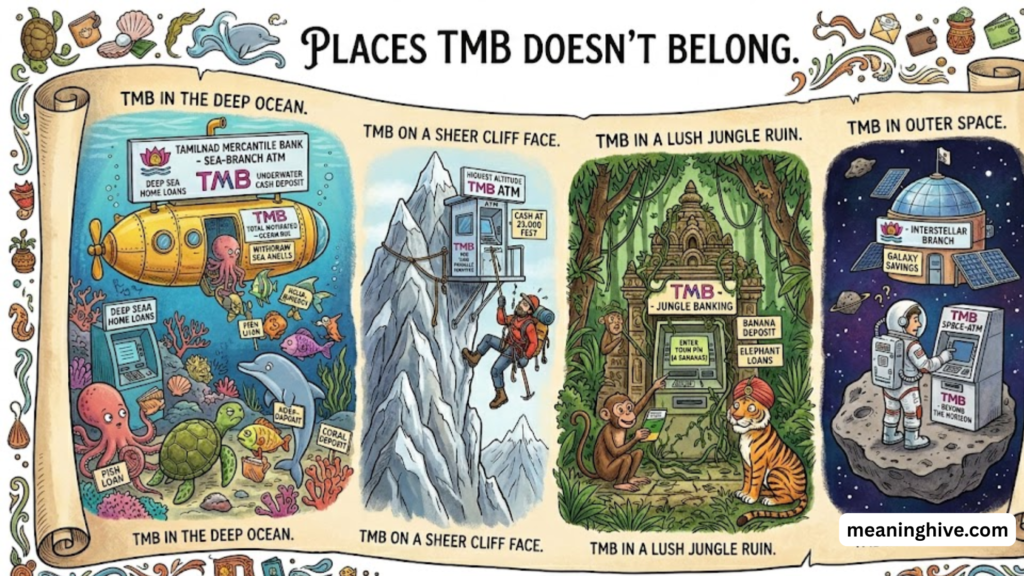
Places TMB Doesn’t Belong
This is where people genuinely go wrong. TMB is informal slang. That means it belongs in casual digital spaces — and nowhere else.
Avoid TMB in:
- Work emails or Slack messages — it reads as unprofessional and can confuse colleagues unfamiliar with the slang
- Messages to people you’ve just met — it comes across as presumptuous before you’ve established a communication style
- Sensitive conversations — if someone is dealing with a tough situation, ending a message with TMB feels dismissive
- Formal contexts — job applications, client communication, academic emails, anything requiring a professional tone
- Messages to older relatives — generational gaps around texting slang are real, and TMB may confuse or irritate them
The rule of thumb: if you’d hesitate to use “lol” in the same message, you should hesitate to use TMB.
Say Something Else
Sometimes the better move is to skip the abbreviation entirely. If TMB feels too casual or unclear, here are cleaner alternatives that communicate the same thing:
| Instead of TMB | Try This |
|---|---|
| TMB (casual) | “Let me know when you’re free” |
| TMB (urgent) | “Can you reply when you get a chance?” |
| TMB (informal) | “Hit me back when you see this” |
| TMB (friendly) | “Message me when you’re around” |
| TMB (polite) | “I’d love to hear back from you” |
These alternatives preserve the intent without the risk of being misread. They also work across contexts — with friends, family, and even semi-professional connections.
Messages That Actually Use TMB
Seeing TMB in action makes the meaning click faster than any definition. Here’s how it looks in real conversations:
Example 1 — Casual check-in:
“Hey, haven’t heard from you in a while. TMB when you get the chance.”
Example 2 — Making plans:
“We’re thinking Saturday for the birthday dinner. TMB so I can confirm the reservation.”
Example 3 — Urgency without alarm:
“Need your address for the package. TMB ASAP.”
Example 4 — After missing a call:
“Tried calling, you didn’t pick up. TMB.”
Example 5 — Social media style:
“Doing the photo challenge — TMB in yours and I’ll share it!”
Notice the pattern: TMB fits naturally after a question, a request for information, or a follow-up to something already sent. It doesn’t stand alone well. Sending just “TMB” with no context is confusing and feels more demanding than intended.

When TMB Means Something Completely Different
Here’s where things get genuinely interesting. TMB isn’t a single-meaning abbreviation — it shifts based on language, platform, and field.
TMB Meaning in Spanish
In Spanish-language digital conversations, “tmb” is shorthand for “también,” which translates to “also” or “too” in English. This is completely separate from the English texting slang and has been used in Spanish-speaking online communities for years.
So if a Spanish-speaking contact texts “yo tmb” — they mean “me too,” not “text me back.” In bilingual chats, this overlap causes real confusion. The language of the rest of the message is your biggest clue about which meaning applies.
TMB Meaning on a Keyboard
In keyboard shortcut contexts or certain software environments, TMB can refer to technical functions or abbreviations specific to that platform. It’s not a universal keyboard term, but in some gaming or developer contexts, TMB appears as a mapped command or button abbreviation.
TMB Meaning Medical
In clinical and research settings, TMB stands for Tumor Mutational Burden — the number of genetic mutations found within a tumor’s DNA. It’s used as a biomarker to help predict how a patient’s immune system might respond to immunotherapy treatment for cancer. This meaning has nothing to do with texting and is used exclusively in medical and oncology contexts.
Why People Misread TMB
Three reasons come up again and again:
1. Assuming tone from abbreviation alone. Short texts can read harsh even when they’re not. TMB in a message from your best friend is breezy. TMB from someone you barely know can feel demanding. Same letters, different relationship dynamics.
2. Platform blindness. People forget that slang behaves differently across apps. What TMB means on Instagram isn’t necessarily what it means on TikTok. And in a WhatsApp group with Spanish speakers, it likely means something else entirely.
3. Overuse. When someone sends TMB after every single message, it loses its meaning and starts to feel pressuring. Like most texting shorthand, its effectiveness drops with repetition.
Real Questions People Ask
Is sending TMB pushy?
It can be, depending on context. Sent once after a genuine question, it’s a normal nudge. Sent repeatedly or right after the first message, it reads as impatient.
Can it sound passive-aggressive?
Yes, especially in writing where tone is hard to read. If the relationship has any tension, TMB can come across colder than intended.
What if I don’t want to reply?
You’re not obligated to respond just because someone sent TMB. A polite, brief reply is always the better move over silence if the relationship matters.
Does TMB work the same everywhere?
No. The meaning shifts between platforms — “Text Me Back” on DMs, “Tag Me Back” on TikTok comment threads, “también” in Spanish chats.
Should I use TMB on dating apps?
Use it carefully. Early conversations benefit from clearer, warmer phrasing. TMB can feel transactional when you’re still building a connection.
What You Actually Need to Know
TMB is a shortcut for “Text Me Back” — a casual, low-key way of asking someone to reply. Most of the time, it’s friendly rather than demanding. The sender just wants to keep the conversation alive.
Where it gets complicated:
- Spanish chats: TMB means “también” (also/too) — a completely separate meaning
- TikTok: TMB often means “Tag Me Back” in challenge or trend threads
- Medical contexts: TMB is “Tumor Mutational Burden” — no texting connection at all
- Professional settings: TMB doesn’t belong there, period
The three things that tell you which meaning applies: the platform, the relationship, and the language of the surrounding message. Get those right and TMB stops being confusing and starts being exactly what it is — a quick, functional piece of modern communication shorthand.
When in doubt, write it out. “Let me know when you get a chance” will never be misread.
Understanding digital slang like TMB is part of staying fluent in how people actually communicate today. Language keeps evolving — and so does the meaning behind a three-letter message.
