


You’re scrolling through a group chat, and your friend texts: “That ending was wild, yfm?” You stare at the screen for a second. Is it a typo? An inside joke? Some new app feature?
It’s neither. YFM is one of those small, fast-spreading texting acronyms that shows up everywhere once you know to look for it — Instagram comments, Snapchat replies, gaming lobbies, even the occasional relaxed work Slack channel. And like most slang, it can feel like a secret code until someone breaks it down for you.
That’s exactly what this guide does. By the end, you’ll know exactly what YFM means, how its tone shifts depending on who’s texting you, how to reply without sounding awkward, and when you should leave it out of a conversation entirely.
What Does “YFM” Mean in Text?
YFM most commonly stands for “You Feel Me?” — a casual way of asking whether the person you’re texting understands, agrees with, or relates to what you just said.
It works a lot like saying “get it?” or “make sense?” at the end of a sentence. Instead of typing out a full question, the sender compresses it into three quick letters, which keeps the conversation moving without slowing down the vibe.
You’ll usually spot YFM:
- At the end of a sentence, functioning almost like a verbal tag
- In texts, captions, comments, and DMs rather than formal writing
- Among people who already text casually with each other
The phrase “you feel me” itself isn’t new. It’s been part of conversational English for decades, especially within hip-hop culture and AAVE (African American Vernacular English), where it served as a quick check that the listener was following along emotionally, not just logically. As texting and social media took off in the 2000s and 2010s, that spoken phrase got the same treatment as “BRB” or “IDK” — shortened into an acronym that could survive character limits and fast-paced typing.
The Most Common Meanings of “YFM” in Text
While “You Feel Me?” is the dominant meaning, the exact flavor of YFM shifts slightly depending on context. Here are the four interpretations you’ll run into most.
1. “Do You Understand Me?”
This is the most literal use. Someone explains something — a situation, a decision, a complicated story — and ends with YFM to check that their point landed.
Example: “I had to leave early because my Uber was already 10 minutes late, yfm?”
2. “Do You Agree With Me?”
Sometimes YFM isn’t about comprehension at all — it’s about agreement. The sender already assumes you understand; they want to know you’re on the same page.
Example: “Honestly, that coach should’ve been fired after last season, yfm?”
3. “You Know What I Mean?”
This version leans more conversational than literal. It’s less a question and more a verbal habit, similar to how people casually drop “you know?” into speech without expecting a detailed answer.
Example: “I just need a day where I do absolutely nothing, yfm.”
4. Emotional Bond or Vibe Check
In its softest form, YFM isn’t asking for information or agreement — it’s reaching for connection. The sender wants to know you relate to how they’re feeling, not necessarily what they’re saying.
Example: “Today’s been a lot. yfm 😩”
| Meaning | What It’s Really Asking | Typical Tone |
|---|---|---|
| Do you understand me? | Comprehension check | Neutral, explanatory |
| Do you agree with me? | Validation of an opinion | Confident, sometimes passionate |
| You know what I mean? | Casual filler, shared understanding | Relaxed, conversational |
| Emotional bond / vibe check | Emotional relatability | Warm, sometimes vulnerable |
How “YFM” Is Used in Real Conversations
Context changes everything with slang, and YFM is no exception. Here’s how it shows up across different spaces.
Friends & Casual Texting
This is YFM’s home turf. Between close friends, it’s an easy way to punctuate a thought or invite a reaction without sounding overly formal.
Example: “Bro that movie plot twist came out of nowhere, yfm?”
Instagram & Snapchat
On Instagram, YFM often shows up in captions or comment replies, inviting followers to relate to a post. On Snapchat, it tends to appear in quick back-and-forth chats rather than longer messages.
Example caption: “Some days just hit different. yfm?”
Dating Apps
In a flirtier context, YFM can carry a slightly different undertone. Paired with playful or affectionate messages, it can feel like an invitation to connect emotionally — though it’s rarely used as a stand-alone romantic phrase on its own.
Example: “I don’t usually vibe with people this fast, yfm?”
Also Read This: NTM Meaning in Text: 2026 Ultimate Guide to This Viral Chat Slang Everyone Is Searching For
Gaming & Online Communities
Gamers use YFM to bond quickly during or after matches, especially when a play was impressive, frustrating, or just chaotic enough to need shared commentary.
Example: “That clutch was unreal, yfm??”
Work or Professional Chat
YFM rarely belongs in formal communication, but in relaxed workplace chats — internal Slack channels among close coworkers, for example — it occasionally slips in as a casual aside. Even then, it’s the exception, not the norm.
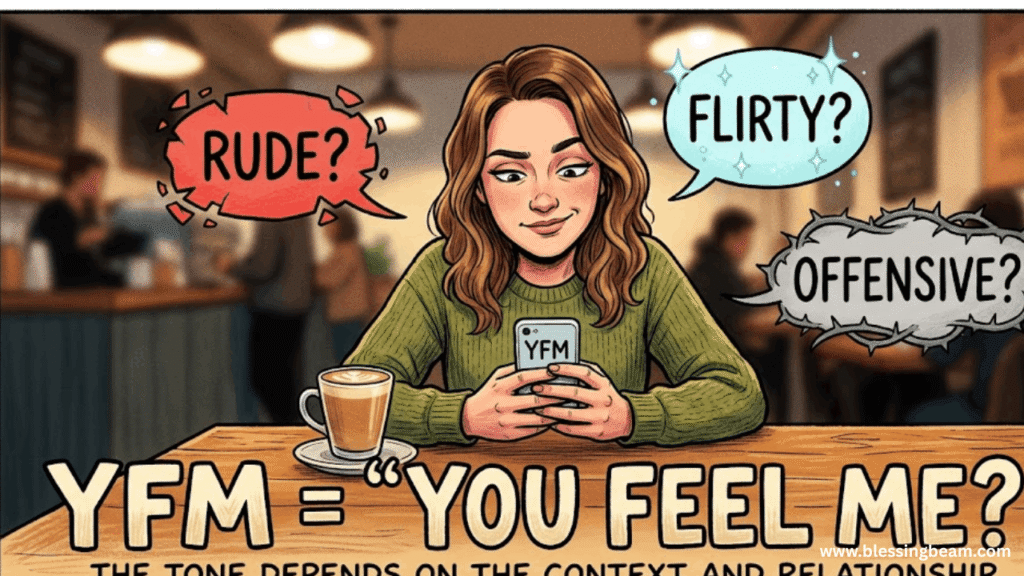
Is “YFM” Rude, Flirty, or Offensive?
Short answer: No, YFM isn’t inherently rude or offensive. It’s informal slang, not an insult or a loaded phrase. That said, tone and context can shift how it lands.
Neutral Use
Most of the time, YFM is simply a casual check-in. No hidden agenda, no emotional weight — just a quick “does this make sense?”
Friendly Use
Among friends, YFM feels warm and inclusive. It signals “I want you to relate to this,” which naturally builds rapport.
Flirty Use
In dating contexts, paired with personal or emotional statements, YFM can take on a flirtier edge — less about logic, more about connection.
Rude Use
If someone uses YFM in an aggressive or confrontational tone — especially after a sharp or dismissive statement — it can come across as pushy or combative. The words don’t change; the delivery does.
Quick gut check: if the sentence before YFM sounds tense, YFM will sound tense too.
How to Respond When Someone Says “YFM”
Replying to YFM is rarely complicated, but matching the tone matters more than the actual words you choose.
Casual Replies
- “Yeah, for sure.”
- “Totally get it.”
- “Yep, makes sense.”
Funny Replies
- “Loud and clear.”
- “Feeling you like free Wi-Fi.”
- “100%, no cap.”
Neutral Replies
- “I see what you mean.”
- “Makes sense to me.”
- “Yeah, I follow.”
Professional Replies
- “Understood.”
- “That makes sense, thanks for explaining.”
- “Got it, appreciate the context.”
Common Misunderstandings About “YFM”
Slang terms get misread all the time, and YFM has a few recurring trip-ups.
1. Thinking It Means Something Serious
Because it’s only three letters, some people assume YFM must stand for something more formal or technical. In everyday texting, it almost always comes back to “You Feel Me?”
2. Confusing It With Other Slang
YFM sometimes gets mixed up with similar-sounding acronyms or assumed to be a typo for something else entirely. Context — the sentence right before it — usually clears this up fast.
3. Thinking It Always Needs a Reply
Not every YFM is a direct question. Sometimes it’s closer to a verbal tic, similar to ending a sentence with “you know?” A simple acknowledgment, or even no reply at all, is often fine.
4. Misreading Tone
Without facial expressions or tone of voice, text can be ambiguous. The same YFM can read as friendly or curt depending on the words around it — so it helps to consider the full message, not just the acronym.
Similar Slang Terms You Should Know
YFM fits into a broader family of texting shorthand built around understanding, agreement, and vibe-checking. Knowing a few related terms makes decoding modern chats much easier.
| Acronym | Meaning | Typical Use |
|---|---|---|
| YFM | You Feel Me? | Checking understanding or connection |
| FR | For Real | Emphasizing sincerity |
| NCS | No Cap, Seriously / similar emphasis tags | Confirming honesty |
| IYKYK | If You Know, You Know | Inside-joke or shared experience |
| TBH | To Be Honest | Prefacing an honest opinion |
| SMH | Shaking My Head | Expressing disbelief or disappointment |
| LMK | Let Me Know | Requesting a response or update |
When You Should Avoid Using “YFM”
While YFM is harmless in the right setting, there are clear situations where it doesn’t belong.
1. Professional Emails or Work Chats
In formal communication, YFM can come across as unprofessional or confusing to colleagues unfamiliar with texting slang. Stick to plain language like “Does this make sense?” instead.
2. Academic Writing or Formal Messages
Essays, reports, and official correspondence call for full sentences, not abbreviations built for speed-texting.
3. Cross-Cultural Conversations
YFM is most recognized in the U.S. and in English-speaking online spaces shaped by American pop culture. In conversations with people unfamiliar with this slang, it may simply cause confusion rather than connection.
4. Sensitive Topics
When discussing grief, serious personal struggles, or emotionally heavy subjects, casual slang like YFM can feel out of place. A sentence like “I’m sorry for your loss, yfm” mixes a serious moment with an overly casual tag — better to leave it out entirely and respond with full, sincere language.

YFM Meaning in Text From a Girl
When a girl texts YFM, the meaning doesn’t change — it’s still “You Feel Me?” — but the emotional weight can shift depending on the conversation. In a casual exchange between friends, it’s simply a relatability check. In a flirtier or more personal conversation, it can signal she wants you to connect with how she’s feeling, not just agree with a fact. Reading the rest of the message is the best way to tell which one it is.
YFM in Chat
Across chat apps — iMessage, WhatsApp, Discord, Snapchat — YFM functions the same way: a short, low-effort way to invite agreement or emotional alignment. In group chats specifically, it often triggers a wave of quick reactions or emojis rather than a full written response, since the acronym itself already implies a yes-or-no kind of answer.
YFM in Text Meaning
To sum it up simply: YFM in text means “You Feel Me?” It’s used to check whether someone understands, agrees, or emotionally relates to a message. It’s informal, friendly by default, and entirely dependent on tone for any deeper meaning. There’s no hidden agenda baked into the acronym itself — context does all the heavy lifting.
Conclusion
YFM might only be three letters, but it carries a surprising amount of nuance for something so short. At its core, it’s a casual way of asking, “Do you get what I’m saying?” — whether that’s about facts, opinions, or feelings. Use it with friends, in DMs, or in gaming chats, and it’ll read exactly as intended: relaxed and relatable. Save it from emails, formal writing, and heavier conversations, and you’ll never have to second-guess whether it landed the right way.
Next time YFM lands in your inbox or comment section, you won’t need to pause and wonder. You’ll already know — and now, so does everyone reading this guide.
FAQs
What does YFM mean in text? YFM stands for “You Feel Me?” — a casual way to ask if someone understands, agrees, or relates to what you said.
Is YFM rude or offensive? No. It’s informal slang with no inherently negative meaning, though tone can make it feel pushy in tense conversations.
Can YFM be flirty? Yes, especially in dating app conversations or emotionally personal texts, where it can invite a deeper connection.
How do I reply to YFM? A simple “yeah, totally” or “I get it” works in most cases. Match the tone of the original message.
Is YFM used in professional settings? Rarely. It’s best avoided in emails, reports, and formal workplace communication.
Does YFM always need an answer? Not always. Sometimes it’s used more like a verbal habit than a direct question.
Where is YFM most commonly used? Mostly in the U.S., particularly in texting, Instagram, Snapchat, gaming chats, and casual social media comments.
Does YFM have other meanings? Rarely, it’s used informally for things like “Your Favorite Music” in niche music chats, but “You Feel Me?” remains the standard meaning.
